Bioinformatics scientist and imaging specialist. Interested in CFD-validated bioprocesses, computer vision for microscopy, and whatever happens when you point a camera at cells long enough.
If you're working on something hard and interesting in biosciences or engineering — let's compare notes.
Hover any card for a quick look. Click to go deeper.
Active
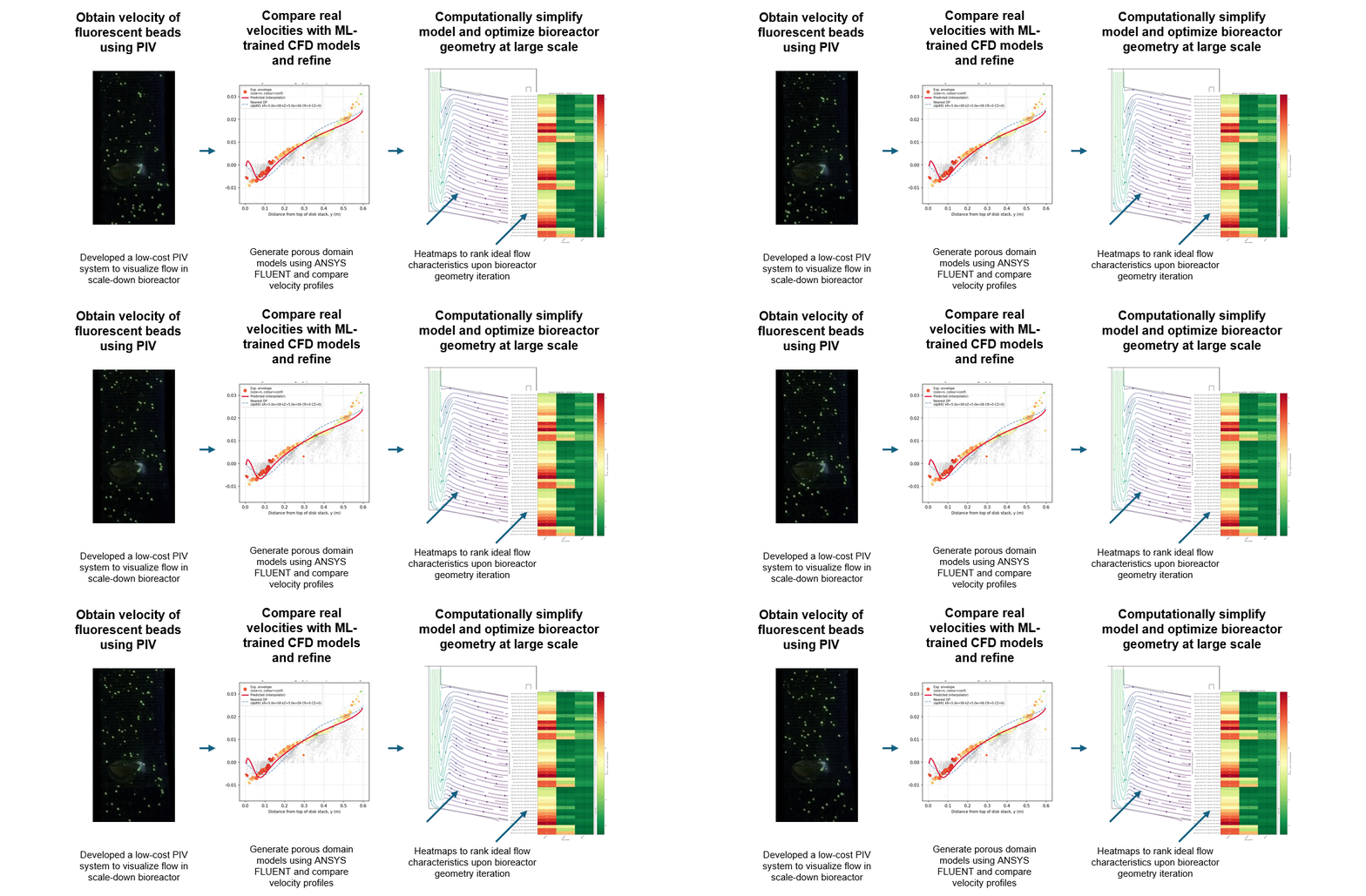
3D Fluent simulations of perforated disk stacks, validated against PTV experiments. Porous media parameters estimated via XGBoost inverse modeling. The question: does shear distribution match what cells actually experience?
In progress
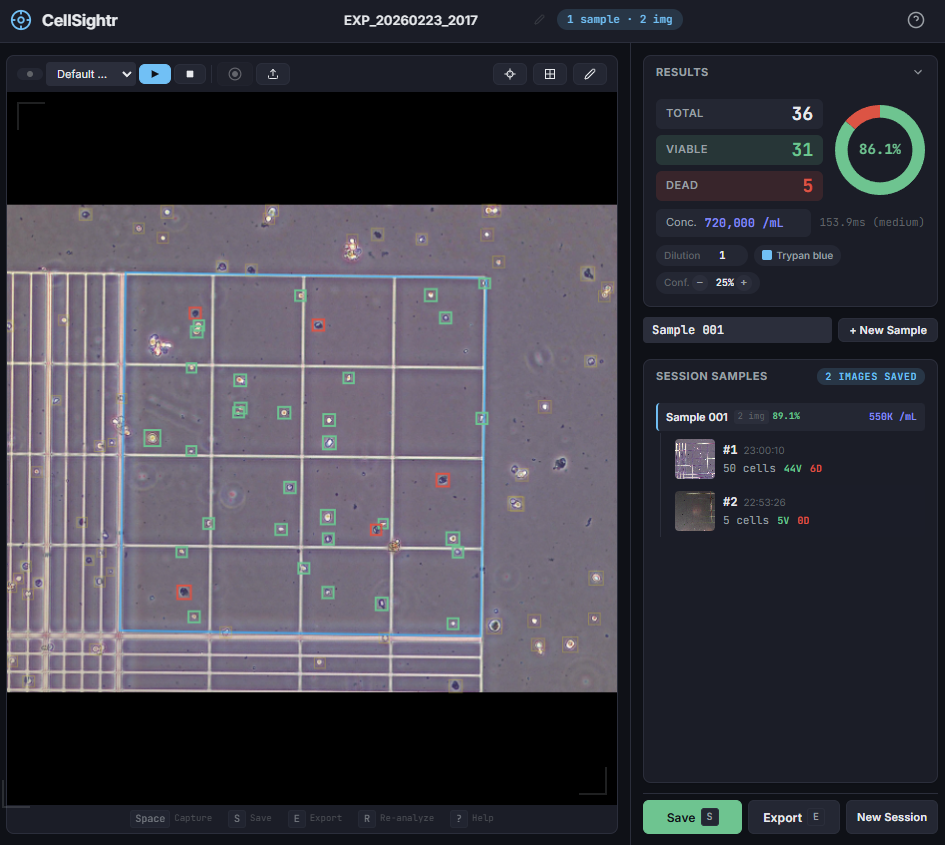
Real-time YOLO inference on a live microscope feed. Goal: replace manual counting in GMP contexts where operator variance matters. Swappable model weights, confidence thresholds, CSV export.
Complete
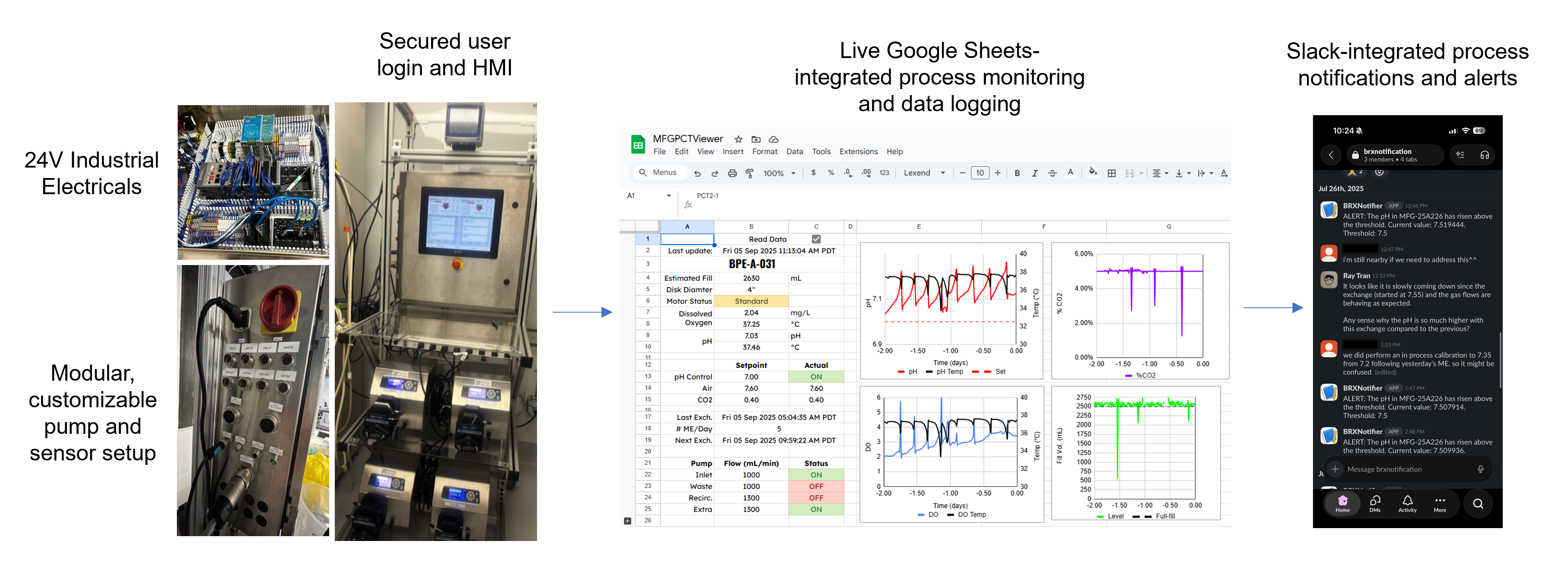
High-throughput framework for pH-controlled porcine satellite cell culture. Automated plate reader ingestion with statistical DoE analysis. What media components actually matter for proliferation?
Active
Given experimental velocity data, what are the permeability and inertial resistance coefficients of a porous disk? XGBoost + CFD ensemble to solve the inverse problem without running 10,000 simulations.
Early stage
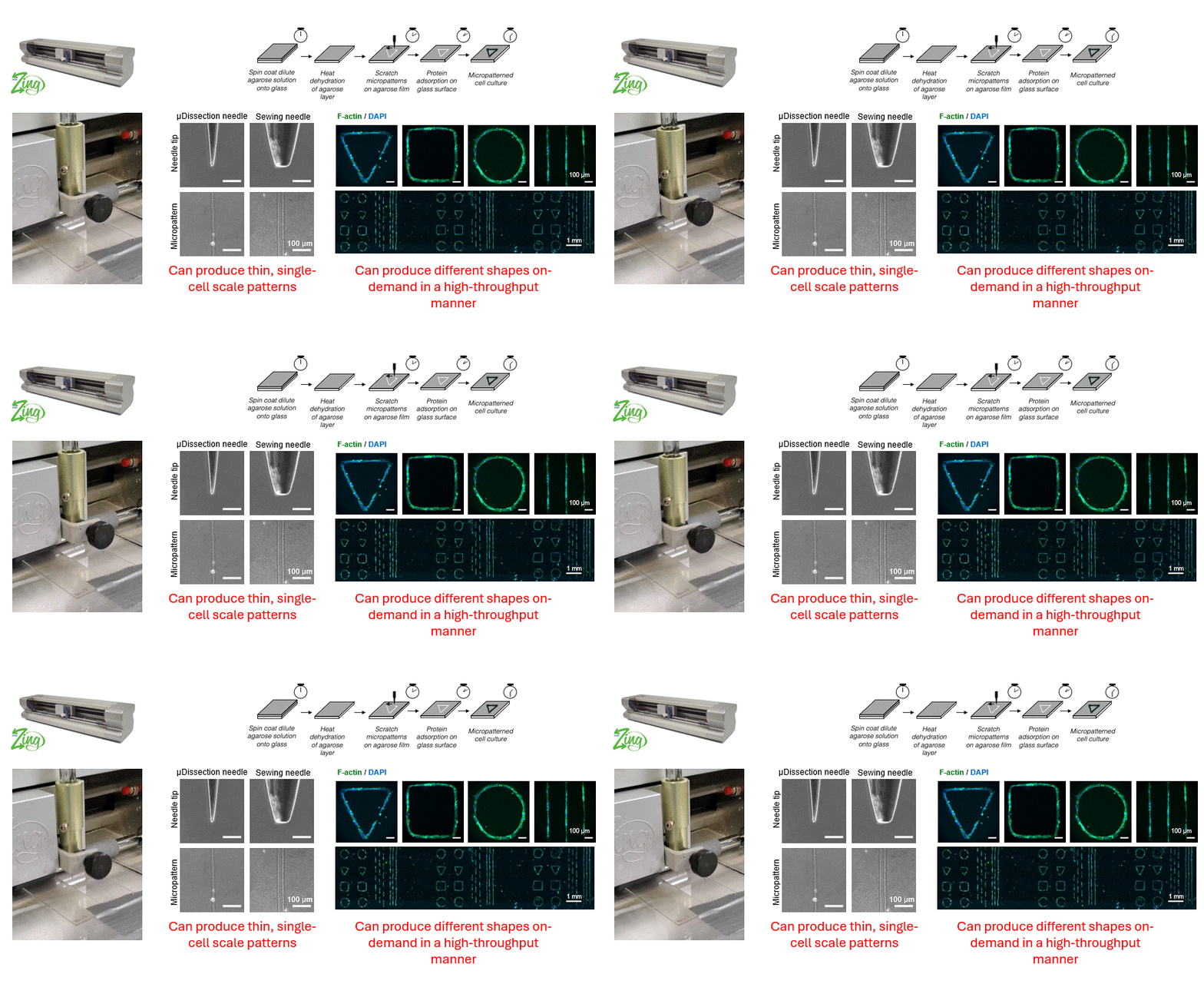
Vision-guided pipetting system for automated chip loading. A camera + servo detects inlet ports and delivers precise volumes. Started as a weekend rabbit hole — turned into something actually useful.
EDIT: Replace this card
Duplicate a proj-card block in the HTML and update the data-modal attribute to point to a new modal below.
A side effect of working with cells is that you end up with a lot of beautiful images. These are from various projects — some published, some just interesting to look at.
Mostly fluorescence confocal, some phase contrast. DAPI, F-actin, MHC, and live/dead markers.
Imaging platform:
Porcine satellite cells · DAPI / F-actin · 40× confocal
Phase contrast · bioreactor sample D4
GFP nuclear · viability assay · 10×
MHC · myosin heavy chain · differentiation D7
DAPI nuclear · seeding density survey · 4×
Replace CSS placeholders with real images — see HTML comments inside each .img-box
I'm a bioinformatics scientist and imaging specialist working on cultivated meat bioprocess development in San Francisco. My PhD was in microfabrication, which means I spent years building tiny devices — then realized the most interesting problems were about the fluids and cells inside them.
Most of my work lives at the intersection of experiment and computation. I run CFD simulations to understand what's happening inside a bioreactor, then go to the bench to check if the model was right. Usually it isn't, and that's where the interesting stuff starts.
Outside of work: building computer vision tools for microscopy, messing with robotics, and thinking about what a GMP-compatible lab automation stack would look like built from scratch today.
If you're working on something in biological engineering, imaging, or simulation and want to compare notes — or if you're hiring — reach out.
The question: when we model a bioreactor with perforated disk stacks in ANSYS Fluent, how well does the simulated velocity field match the physical device?
Porous media models in CFD require permeability and inertial resistance coefficients that are almost never measured directly — they're guessed or taken from literature for different geometries. This project builds a pipeline to estimate those values from experimental PTV velocity data using inverse modeling.
An XGBoost surrogate is trained on CFD simulation ensembles across a parameter range. At inference time, experimental velocity profiles are fed in and the model predicts the most likely porous media coefficients. These are used to run the final validated simulation.
Currently validating against 3D experimental data. The 2D axisymmetric models are working — extending to full 3D is the current focus.
Manual hemocytometer counting is tedious, operator-dependent, and hard to audit. This tool runs YOLO inference on a live microscope feed and counts cells in real time.
In regulated manufacturing, counts need to be reproducible and documented. A CV tool produces an image record of every count alongside the output, and doesn't get tired.
Swappable model weights (trainable on your own cell type), adjustable confidence thresholds, live bounding box overlay, and CSV export. Runs as a lightweight FastAPI app on the imaging workstation.
High-throughput screening framework for evaluating serum-free media formulations for porcine satellite cell culture. The goal: identify which supplements actually drive proliferation versus which are expensive noise.
Full factorial and Plackett-Burman designs run in 96-well format, automated data ingestion from plate reader outputs. Statistical analysis identifies significant main effects and two-way interactions.
Given a set of experimental velocity measurements, recover the porous media parameters (viscous and inertial resistance) without running a manual parameter sweep.
A surrogate trained on CFD simulation data maps velocity field statistics to the input parameters that generated them. At inference time, experimental data is fed in and the surrogate inverts the mapping — giving you the best-fit physical parameters in seconds instead of weeks.
Vision-guided pipetting system for automated microfluidic chip loading. A camera detects inlet port positions and a servo-driven pipette delivers precise volumes without manual alignment.
Started as a weekend project to solve a real frustration. Now a proper system with a CAD frame, calibration routine, and a repeatable alignment error under 50 µm.
Add your project content here. Duplicate this modal block, give it a new id, and set the corresponding proj-card's data-modal to match.